

Surviving a 47-Day Coma
CBN.com "I was very much in a fog, but I remember she was wearing red and she was 2 months old. They brought her in, and I remember feeling so guilty because I wasn’t really interested. It was like, 'She’s a nice baby. Who’s her mom?' "
That was Lindsey O’Connor’s reaction when her fifth child, Caroline, was placed in her arms. Two months earlier, Lindsey had entered the hospital with her husband, Tim, to give birth to Caroline.
"I had a normal labor and delivery, and she was born beautiful," Lindsey recalls. "But I began to feel bad shortly after that."
Tim noticed the change in Lindsey's health right away.
"I just saw her lay her head back and her color just leave. That’s the point I knew there was something wrong here," he explains.
That's how the O’Connors’ ordeal began. Before, Lindsey was a busy wife and home schooling mother. She was also a popular author and speaker. But during Caroline’s birth, Lindsey’s uterus ruptured.
Says Lindsey, "I remember looking up and seeing doctors and nurses on either side of me, and I looked up at one of them and said, 'Please take care of me. I have five children now.' Those were the last words that I would say in almost three months."
Lindsey underwent two emergency surgeries—the first to repair her ruptured uterus, and the second to remove it altogether. During the procedures, Lindsey lost half of her blood volume and slipped into a coma. But from the first moment Lindsey had difficulty, her family, friends, and church went into action.
"A large prayer meeting was called at church, and people turned out in great numbers praying for Lindsey," Lindsey's pastor, Brent Kinman, of Heritage Evangelical Free Church, divulged.
The prayer meeting wasn't just local, as Tim points out.
"We had people in South America praying; we had people in the Middle East praying; it was amazing—God’s network," he says.
Initially, Lindsey’s prognosis looked hopeful, but then those projections drastically changed.
In September, on Friday the 13th, 2002, it became a vigil—a death bed vigil—because Lindsey's ability to take oxygen into her bloodstream had just about reached maximum capacity.
Lindsey was experiencing adult respiratory syndrome, a condition her family physician, Louis B Kasunic, described as "deadly" because "more people die than live."
And to family friend Kathleen Groom, Lindsey looked deathly ill.
"She was swollen, bloated, and ashen gray," Groom says. "She looked like she was already dead. The machines were blowing the air in and sucking the air out. It was like they were trying to keep a dead body alive."
Pastor Kinman was sure that Lindsey would die, so he began making preparations.
"I began to jot down some notes for remarks I was going to share at her sermon, should it come to that," her pastor recalls.
With the complications that Lindsey had and the difficulties that she faced, Dr. Kasunic explained to the O'Connors that the outlook for Lindsey was not good. That's when Tim called in the family.
"I left the hospital, got all the kids gathered here at the house; and told them that there’s a very strong possibility that Mother may not live through this," Tim says.
Daughter Jacqueline remembers that day vividly. "We were expecting her to die, right here on this bed. It was the hardest day of my life, I think," she says.
Daughter Allison was equally affected. "I felt like I’d never see her again and I felt so sad that I couldn’t talk or anything," Allison recounts.
Son Collin says that he also "felt jealous that other people’s moms are still alive."
And, finally, daughter Clarie notes "extreme heartache" at the thought of being motherless "and for my father because they had been married for 19 years—just sorrow for him."
Lindsey made it through that night. Then a month later, amazingly, Lindsey woke up.
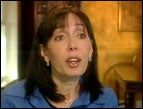 "The moment I saw her reaction after telling her that she’d been there 47 days, I knew I had my wife back," Tim says.
But Lindsey’s trial was far from over.
"I could not move; I could not breathe; I couldn’t talk; I was on a ventilator," Lindsey explains. "To go from being so healthy to being completely and totally debilitated, I can’t tell you what a shock that was."
Altogether, Lindsey was in the hospital four months. When she came home, she still couldn’t walk on her own or breathe.
"I was tethered by oxygen 24 hours a day," Lindsey remembers.
She didn’t even know her own baby.
"It’s like looking at someone else’s child," Lindsey says. "Last week I was cleaning her room, and I picked up this baby book that I didn’t even know we had—when she first smiled, when she first made happy noises, when she first slept through the night."
Lindsey’s recovery was a slow process, but today, she’s once again an active wife and mother. She has even completed a new book called If Mama Goes South, We’re All Going with Her. No one had expected these positive results. In fact, doctors had expected permanent brain damage—if she survived at all.
"She was dead. There was no reason for her to be able to talk to us, walk around with us, pick up her baby, give her husband a hug—any of those things, and she’s doing all those things," Dr. Kasunic says.
"I think the only reason that I am sitting here talking to you today is because it took every prayer of every single person," Lindsey explains.
Adds Dr. Kasunic, "You can’t account for her survival based on just medicine. That’s miracle kind of stuff. That’s where it comes from."
"It’s because of God’s mercy that I’m here and because of God’s power that when I got to the end of the medical road—and all that medical technology could do for me and I was maxed out on drugs, maxed out on technology, and maxed out on man’s wisdom, and they said we’ve done everything we can, she’s not going to make it—God took over. That’s why I’m a miracle," Lindsey concludes.


