- When public schools shut down last year,
millions of homes becamevirtual classrooms.
Students became anxious,disinterested, and isolated,
unable to truly interactwith friends and teachers.
The result, a pandemic within a pandemic,
as some struggle to findanswers or a way out.
Heather Sidle and MichaelMyronuk have fond memories
of their 14 year old son, Michael Jr.
- One of the most uniquekids I've ever met.
And he just had a really cool personality.
- Pretty much one of myfavorite people in the world,
not just from being my son,
but just because of his insight,
his humor, goofiness, intelligence.
- [Charlene] Then lastOctober, tragedy struck
- The night before he took his life,
the two of us were hangingout and watching a movie
and eating dinner.
And we had a perfectly great night.
And then the next morning he woke up,
and went to his dad'shouse and he had a plan.
- [Charlene] Sidle recalled the moment
she learned about her son's suicide,
shortly after leaving him at his dad's.
- He sent me a text after Ihad already dropped him off.
So I literally probably almostcaused a 20 car pile up.
'Cause I turned around inthe middle of Baltimore City,
which was, I wasn't even thinking,
'cause I just freaked outand drove back to his house.
And by that time it was too late.
- [Charlene] An honor student
who had just transitioned to high school,
Michael struggled with virtual learning
when COVID shut down his school.
- The response to the virus has been
worse than the virus itselffor our younger people.
They get a break fromwhatever may be going on
or the stressors at home.
- So I'm getting thesereports every day saying,
your kid's failing, failing, failing.
And Michael's like, "I turnedit in, I turned it in."
And there's, you know, this pressure
building inside of him where, you know,
I'm literally freaking outthinking my kid is gonna fail.
By that time he was already30 assignments behind.
- [Charlene] And this family isn't alone.
As medical and educationexperts continue to warn
about the negative impactof school closures.
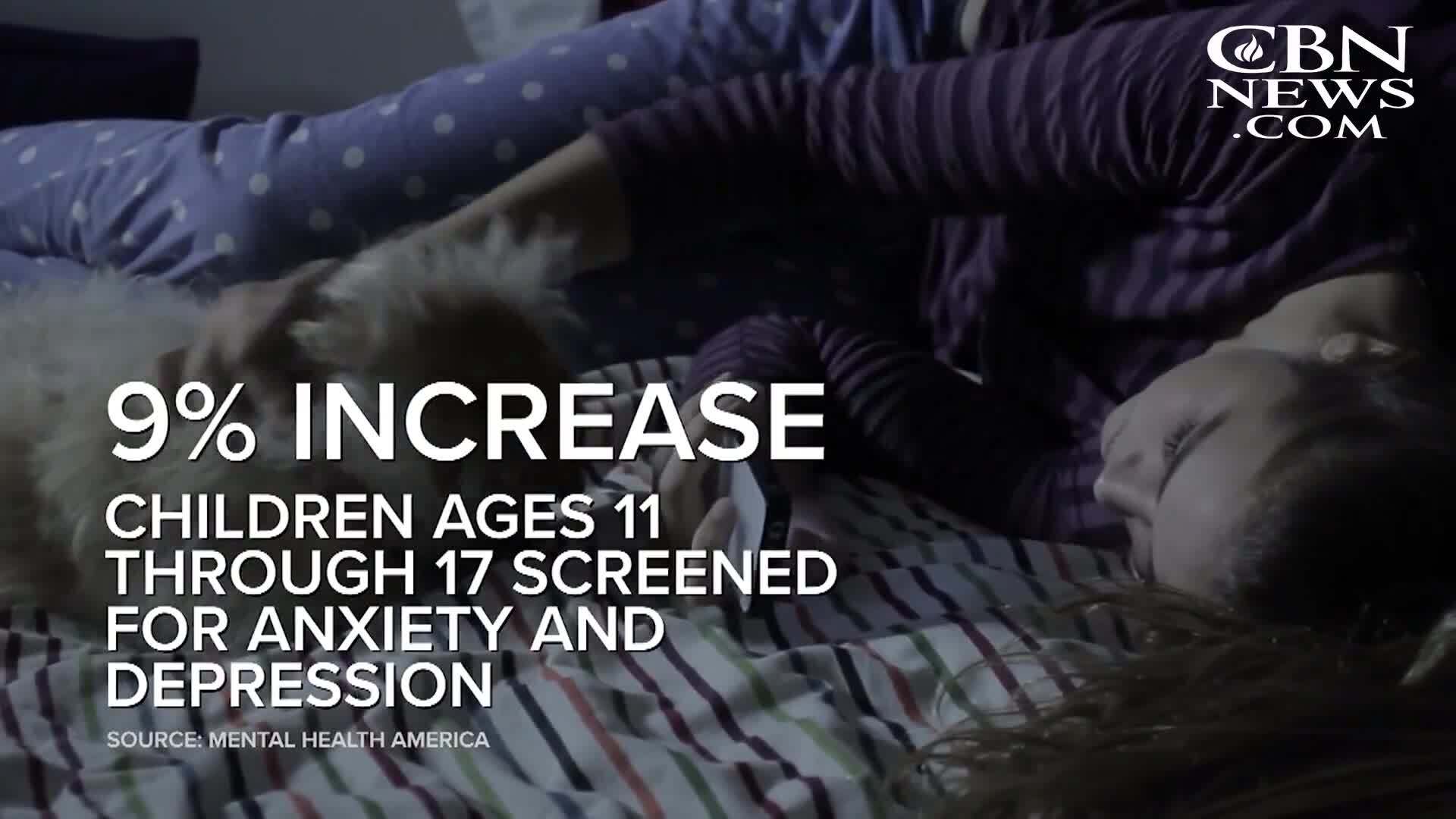
According to Mental Health America,
2020's rate of children ages 11 through 17
screened for anxiety and depression
jumped 9% over the previous year.
CDC data also shows emergencyroom treatment for kids
with mental health conditions skyrocketed
from April to October last year.
Sidle says faith in Godmakes the difference
in helping her deal withthe loss of her son.
- Having that commitment to really
turn towards God every day.
And I just put this wholesituation on his feet and said,
you gotta help me, becauseI cannot do this by myself.
It's like so hard.
So that's really kept me.
- [Charlene] Today, Michael'sparents want to use their loss
to help raise awareness aboutteen depression and suicide,
launching the Arrow of Light Foundation
in their son's honor.
- I want to remove anyfinancial obstacles.
We want to help remove that stigma
by talking about it and talking about it.
If we can provide them with, you know,
give them an Uber gift card,
and just literally get them there,
or they can do telehealth,
you know whatever it takes to help them
with their mental health.
- That you know every person is important.
You know, maybe not toyourselves at that time,
but you are important to somebody else.
So you're not alone.
It's never a problem to talk to somebody.
You know, if it's somebody you know,
or somebody you don't know,you just be able to talk.
- [Charlene] Meanwhile, Sidle says
although her son is nolonger here with her,
she plans to keep fightingfor other kids and parents.
- My son and I were just baptized together
the year before this happened in 2019.
And you know, I trulybelieve that he's a believer.
But you know, the enemywas talking louder.
(scoffs)
So, we lost him.
We lost the battle, wehaven't lost the war.
- [Charlene] Charlene Aaron, CBN News.