(dramatic music)
- Let me ask you something,if they lift these quarantines
how many of you aregonna take your children
and go to the movies?
Huh, how many of you aregonna go out for a nice dinner
at some restaurant?
A lot of people are gonnasay, "Not yet, not yet."
And how will you know thatthe people sitting next to you
don't have that COVID-19?
Maybe they don't showoutward sign or symptoms
but they're carriers.
How will you know those things?
I mean this is going to beserious and the question
is what kind of testing isneeded to guarantee the safety
of the people?
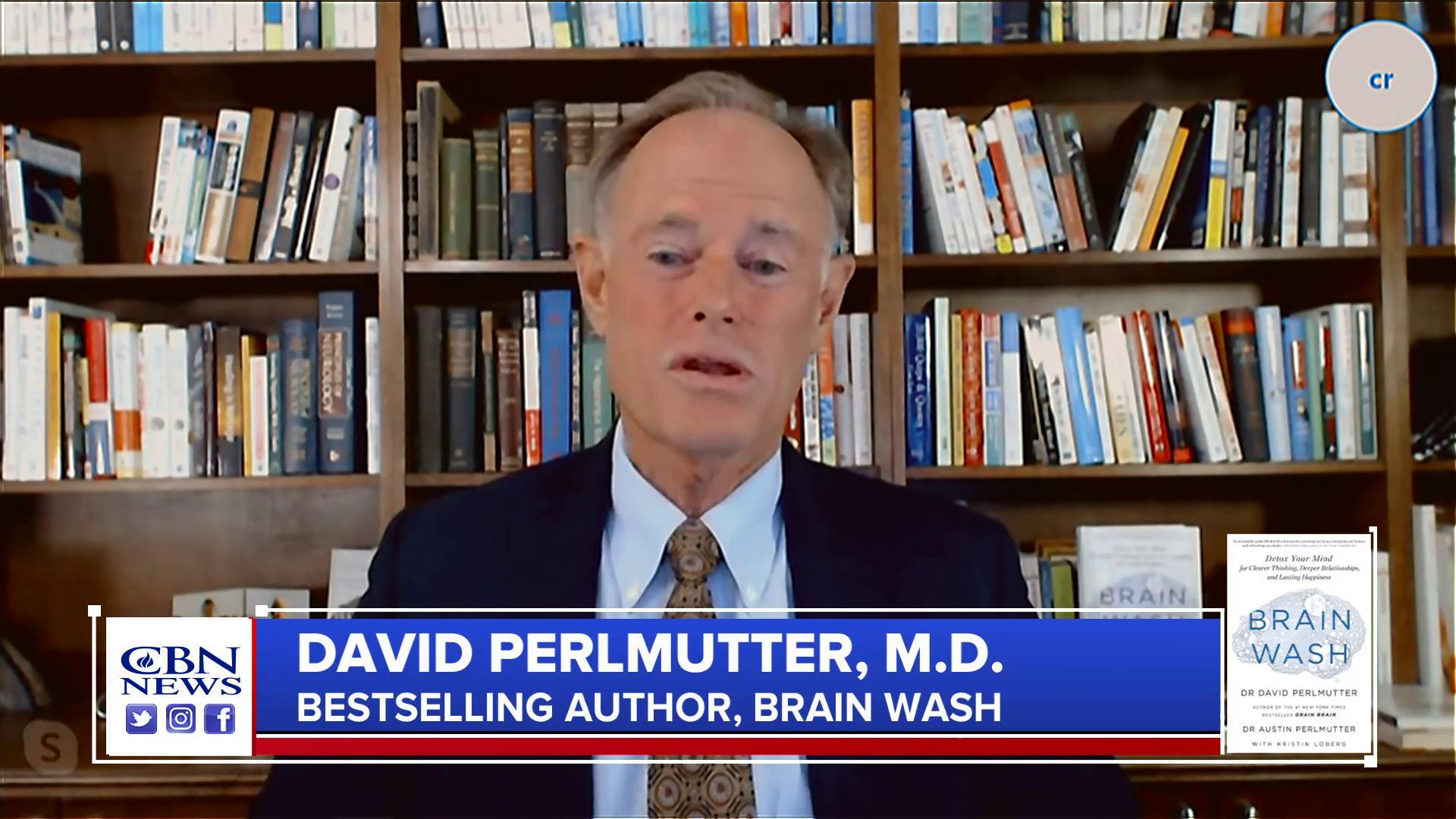
Well we have now neurologistand best-selling author
Dr. David Perlmutter, he'shere to talk about that
and other concerns ahead.
And Dr. once again we welcome you.
Let me ask you that question,if we open up how will people
know that the folks sittingnext to them in a restaurant,
or next to them in a theater,or next to them at a concert
are free of this COVID-19?
How will we know about them?
- Well we're not going toknow and that's really what
this comes down to.
We know that it maybe that as many as 50%
of individuals infectedand therefore infectious,
with respect to theCOVID-19 virus, may have
no symptoms whatsoever.
Think about that.
When we are screening peoplefor example who are going into
a grocery store, or comingoff a plane, by taking their
temperature we're at leastmissing 50% of people
because they don't have symptoms.
And I think the whole issuereally comes down to the ability
that we have to test people.
That's really front and centerin the entire conversation
today about getting,relaxing the quarantine
and allowing people to getback to work which is really
important but, you know, there seems to be
this great divide.
Do we keep people in lockdownor do we open up the economy
and let things resume?
And I don't think thatthese are necessarily
mutually exclusive.
We can do both provided wecan test people aggressively
and determine who may beimmune and therefore able
to go back to work or whomay have just picked up
the virus and therefore could transmit it.
That would obviously besomebody who you wouldn't want
to bring back to the meatpacking plant.
- Well what tests are available?
- Basically Pat there aretwo types of tests available.
We call them molecular and serological.
The first is a test thatactually looks for the genetics
of the virus, telling you ifyou have that in your system
right now and that'sthe typical throat swab,
nasopharyngeal swab thatyou're seeing around the world.
The next test that is becomingvery popular is a measurement
in your blood of the antibodies.
In other words has your bodynow mounted an immune response
against COVID-19 and areyou likely now immune
and therefore not able tocontract the virus again?
Now both of these kindsof tests are not 100%
and that is unfortunate.
The latter, that tests theantibodies, we know can be
what we call false positive,can indicate that you have
antibodies but these maybe antibodies to other
coronaviruses that we may havebeen exposed to years ago.
I mean the history of coronavirusdates back to the 1960's,
that's when we firstwere able to identify it.
So there are a lot ofpeople going around who
have antibodies to acoronavirus that may cross-react
with many of these new testsand therefore give people
a sense that they've beenexposed this time around
when they may not have been.
- Well Dr. how do you scale this stuff?
I mean you're talkingabout a limited number
of people who you can test butI mean we've got 300 million
people in America.
How do we get tests to all of them?
- And we need to scale it.
Until it is scaled, youknow, to a much higher level,
we're testing about150,000 Americans each day
and Harvard Research indicatesthat in order to be effective
in terms of screening whohas it and who doesn't,
or who has immunity versusthose who do not, we need
to be doing three times thatamount or around 500,000
tests each day.
In an ideal world, and I canonly imagine this could happen
with our scientists beingable to figure this out,
we should be able to embracethe idea that we could screen
and test much like people doat home blood sugar testing,
people who are diabetic.
If we could develop some kindof test along those lines
people could test frequentlyand know if they're negative
and when they convert to being positive
and at that point would thenbe able to isolate themselves,
let their people at their employment know
that suddenly they've turned positive.
Nobody wants anyone to goto work in any capacity
who suddenly is carrying the virus.
They stay home until they'rebetter and then go back to work
hopefully having now become immune.
That's the program thatcan satisfy both sides
of this debate, you know,those who wanna isolate us
and those who want us to go back to work.
- What about that experimentaldrug called Remdesivir?
Has that, are you pleasedwith any of the tests of that?
- Hard to say.
The report that came outof Chicago several days ago
actually wasn't a report itwas actually leaked information
where the individuals involvedin the testing were extremely
positive in terms ofwhat they had observed.
So we're gonna have to waitto see what the exact science
looks like in terms of themetrics that they measured.
We do feel though thatRemdesivir will likely be very,
very important in termsof treating symptoms.
Recognize this isn't animmunization but this is a way
of treating people who havemoderate symptoms, or who
are hospitalized withsevere symptoms, as a way
of shortening for exampletheir hospital stay.
Don't yet have all the information
on that but it looks very promising.
- Dr. one last question.
You understand, or at leastwe understand, this virus may
actually effect a person's brain.
What are the implications of this?
- Those implications areprofound and one study published
several days ago, in the "NewEngland Journal of Medicine,"
noted that more than half ofpeople admitted to the hospital
have confusion but I thinkwhat was more compelling
was that about a third ofthe individuals discharged
from the hospital haveresidual neurologic issues.
For example, problems with whatwe call executive function,
planning purposefulactivities, doing things,
taking care of things,
troubles with inattentionand so we don't know how much
of those residual problemswill be persistent
in the long run.
But if this infection leavespeople with brain issues,
with cognitive issues,it is a different story
that we're going to have tobe telling moving forward
and really raises ourconcern and clearly focuses
on our efforts to move forwardwith ways of keeping people
from getting this virusin the first place.
I.e. trying to find someform of immunization
and really being a lotmore stringent in terms
of isolating people who are carriers
and could be transmitting this virus.
So, you know, we now see thatwhen we talk about who should
be tested that confusionhas been added to the list
of things like fever and a drycough and pain in the chest.
Now there are some neurologicalsymptoms that would qualify
somebody for being tested.
So, you know, things areevolving with our understanding
of how this virus presents itself.
- Dr. you're talking aboutsomething like Alzheimer's,
now that becomes terrifying.
It's one thing to have afever and you get over a cough
but there's somethingelse to have your brain,
is that gonna be a permanentdisability you think?
- Don't know the answer to that.
I mean to be sure there hasbeen a lot written in the past
several years about thepossible infectious causes,
or what we call ideology,of Alzheimer's disease.
Dr. Rudolph Tanzi atHarvard has been really
at the forefront of reallyexploring how viruses
and other infectiousagents, even some forms
of bacteria like chlamydia,may be involved in creating
a scenario that leadsto Alzheimer's disease.
The prospect that COVID-19 couldleave people with some form
of cognitive impairmentis daunting in terms
of what that might doglobally to brain function
again on a global basis, platform.
So we don't know yet.
I would say this preliminarystudy involved very few
individuals, 40 individuals,that's not a large number
as we look at medical research.
But nonetheless published in
the "New England Journal ofMedicine" which is arguably one
of the most respected medicaljournals on the planet
and they raise this questionthat we need to follow people
who have recovered afterhospitalization very closely
and get some sense as towhat their residual brain
compromise might be.
But having said that if in factthat turns out to be reality
it really causes us to thinkabout how we should step up
our efforts to preventthis in the first place.
In other words look at whatyou and I have talked about
over the past several weeks.
Ideas of for example givingthe plasma of somebody who has
recovered to a person evenas a preventive to keep them
from even contracting thisvirus in the first place.
- Well Dr. thank youfor your brave analysis.
Ladies and gentleman Dr.Perlmutter's book is called
"Brain Wash: Detox YourMind, Clearer Thinking."
He's got one called "Grain Brain."
You really need to getthese books for yourself.
They're available wherever books are sold
and Dr. Perlmutter is a veryhonored guest on this program.
I think his insightfulanalysis of what's going on
is as good as anything on television.