A Warning on International Holocaust Remembrance Day: The 'Spiritual Madness' of Anti-Semitism Is On the Rise
Read Transcript
(solemn music)
- A few years ago I was in Munich
and I drove up to a place called Dachau.
And I went inside and I sawsome of the terrible things
that had been done to the inmates.
They had this thing
over as you entered it
kill what makes free,even a horrible thing.
I remember the tortures thatthose people went through.
I began to think, what would you do?
What would I do if suddenlythe power of the state
was put against us?
What would we do?
If all of the mechanism of the state,
the judges, and the juries,and the prosecutors,
and the police were all against you
and wanted to destroy you.
We'll never forget that'sbeen the rallying cry
for Jews everywhere sincewhat is called the Holocaust.
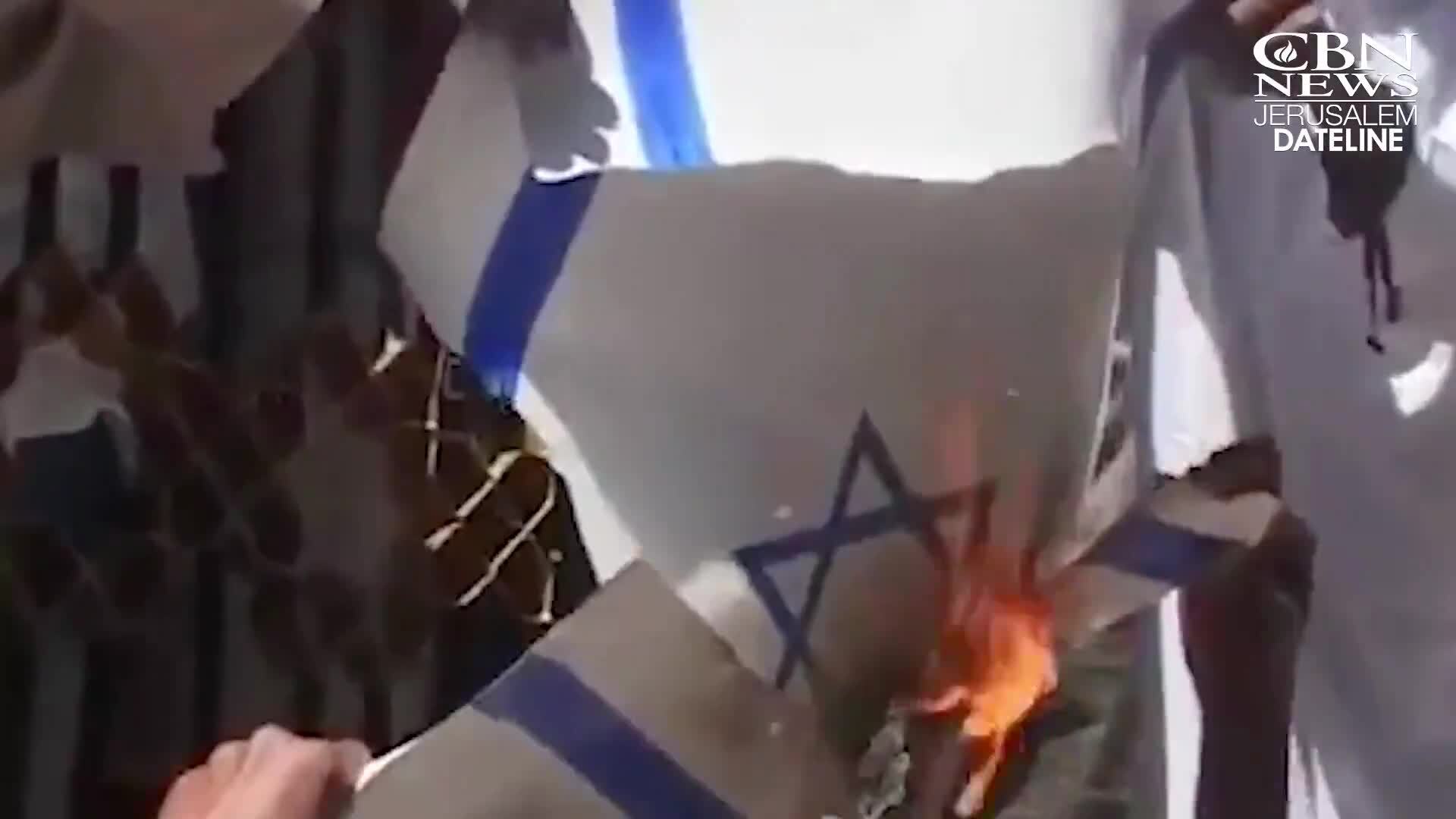
And still 75 years later,the tide of anti-Semitism,
amazingly is on the rise.
Chris Mitchel brings us this look at
what has been called a spiritual madness.
(air swooshes)
- [Chris] More than 40 world leaders came
to Jerusalem last week tocommemorate the 75th anniversary
of the liberation of Auschwitz,
the most notorious Nazi death camp.
They came to say, "Never again."
The German President, FrankWalter Steinmeier issued
an ominous warning.
- The spirits of evil areemerging in a new guise,
presenting their anti-Semitic, racist,
authoritarian thinking asan answer for the future,
a new solution to the problems of our age.
- The Jewish peoplehave learned the lessons
of the Holocaust.
Always to take seriously the threats
of those who seek our destruction.
- [Chris] Ahead of the event
a special Europeandelegation visited the site
where the Nazis perpetratedso much evil and hatred.
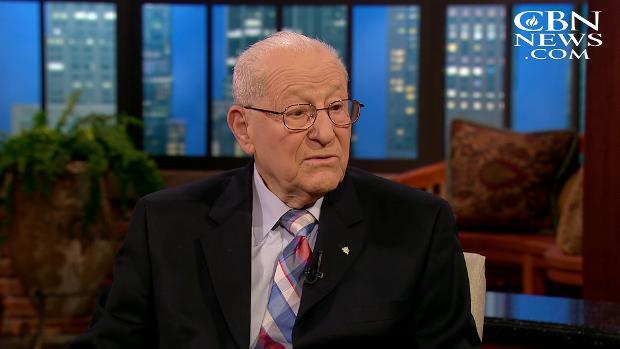
Born in Poland,
former Israeli Chief Rabbi Yisrael Meyalau
is a Holocaust survivor.
- Anti-Semitism issomething you can't explain
but you cannot find a reason for it.
It's against dialogue,
it's against logic,
it's a spiritual madness.
- [Chris] Yet throughoutEurope and even in the US,
this spiritual madness is on the rise.
Chris Mitchell, CBS News, Jerusalem.
- Thanks, Chris.
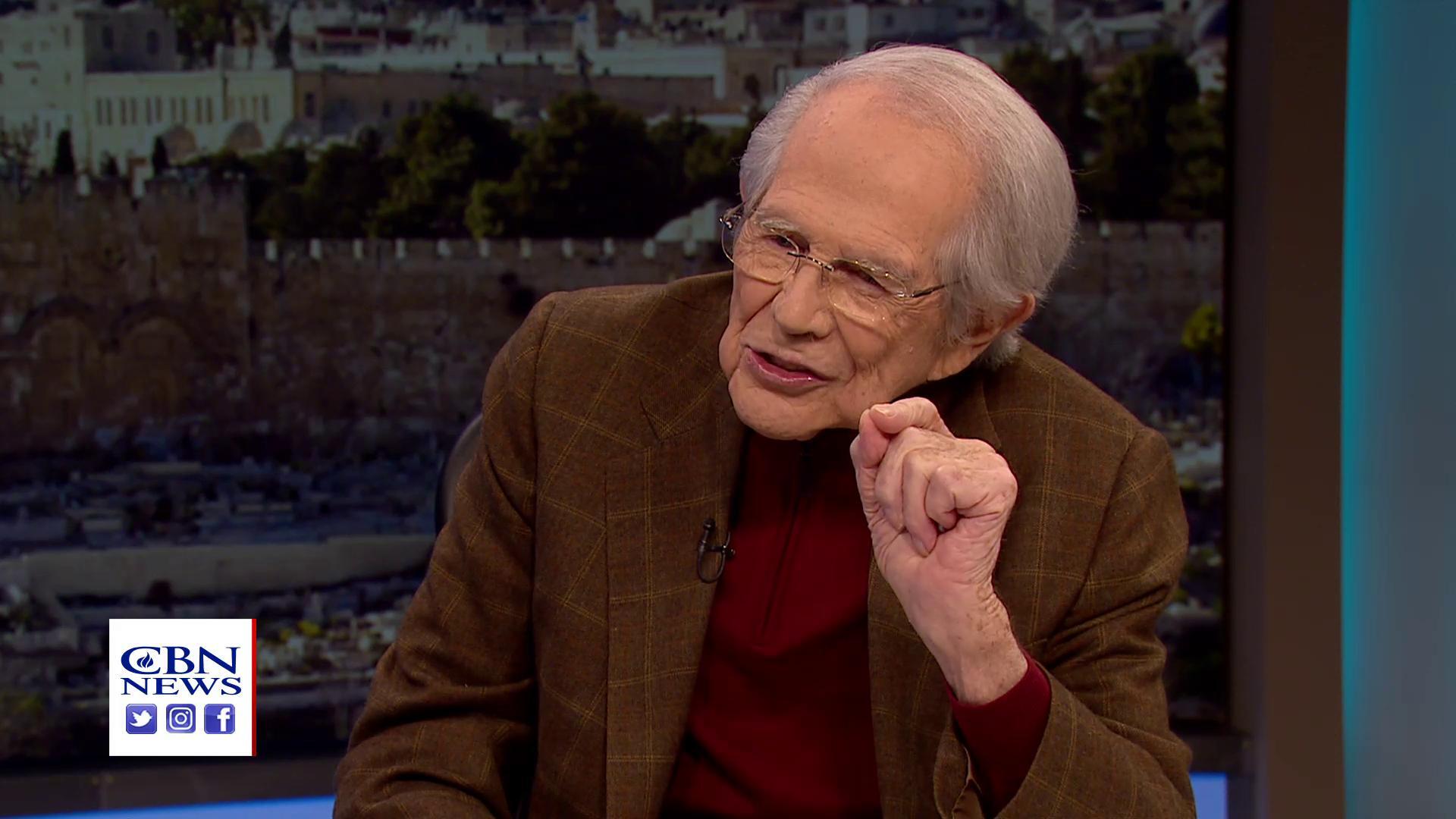
Joining us with more oninternational Holocaust Remembrance
is Rabbi Ariel Burger.
He's been a lifelong studentof Holocaust survivor
and Nobel laureate Elie Wiesel.
He's also the author of a book called
"Witness, Lessons fromElie Wiesel's Classroom."
So this is the story and Rabbi is with us,
so glad to see you.
- Good to see you too.
- How did the Jews feel?
With all the arm of the state
was turned against them, itmust have been a horrible thing.
I was there visiting Dachausome years ago, it's just awful.
You're talking about Auschwitz,
it's hideous.
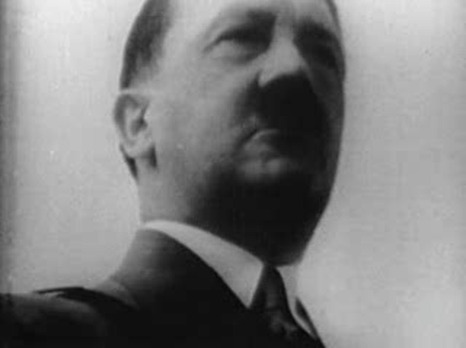
What was the thing that wasat the origin of Hitler's?
It was a madness.
- It's a kind of madness
that reappears throughout human history.
- [Pat] Yeah.
- And just as the Jew is eternal,
anti-Semitism seems to be eternal,
as well as the shadow of that eternity.
So we find it in pagan times,
we find it all through historyin Europe and elsewhere.
Now on the right and the left
and of course it's rising again.
- Why?
What do you think?
What's was going on?
- Well, when Elie Wiesel wasasked that question publicly
he would always say,
"Why should I speak for an anti Semite?
"Let him come and answer for himself."
- [Pat] (laughs)- We don't really know why?
Anti-Semites give all kinds of reasons
for what the Jews are doing wrong?
Or why they're evil?
But ultimately, it's akind of conspiracy theory.
It's a belief that the Jewsrun the world secretly.
If we did, I think thingswould look better for the Jews.
(chuckles)- No question, no question.
- But there's a real senseof conspiracy and projection.
And Jews have beenaccused of being too rich,
too poor, too urban, cosmopolitan,not cosmopolitan enough,
too assimilated, not assimilated enough,
too focused on their own interests,
undermining the interests of others.
It's really,
on religious grounds and other grounds.
It's very mysterious.
It's a form of madness
and most importantly,
perhaps for all of us who are not Jews,
all of you who are not Jews, Ishould say, it's a harbinger.
What happens to the Jewshappens to others as well
and Elie Wiesel believethere was a direct line
between Auschwitz and Hiroshima.
And the Holocaust
and violence we see in school shootings
and things like that.
He thought that that madness begins
with the Jews as the victims but spreads.
- You know that thing thatwas put out the writings
of the Elders of Zion,
that was an absolute fabrication
who was responsible for that, do you know?
- Well it started in Russia
but of course it's very popular
in the Arab world now as well.
- [Pat] Oh, really.
- And it's been in recentpublications in Germany
and elsewhere on the far right.
And it's a conspiracy.
It's a story of Jewish conspiracy,
the Rothschilds running theworld and things like that.
And of course, it's complete fabrication.
But it's gotten a lot oftraction among haters.
- Well, it was kind ofa spiritual madness.
You remember
when Benjamin Disraeli
was Prime Minister of Israel and
Queen Victoria said,
"Mr Prime Minister,
what revenues do you havefor the existence of God?"
And his answer was,"The Jew, Your Majesty,"
but the Jews are the chosen people
to them has been entrustedthe oracles of God.
They have been the authorsof the Old and New Testament
and that the faith that wehave as Christians comes
from the Jews.
- That's right.
And our job is to bring God'spresence into the world.
- [Pat] Yeah.
- And we try to do that throughout history
in all kinds of ways,
working for justice in the world,
working for peace in the world.
And also for those ofus who are traditional
in our practices,
as I am, we we stick closelyto the biblical ways of living,
as developed through the rabbi's
and the rabbinic traditionover hundreds of years.
And that keeps us going.
I think that's what's kept us alive.
They say, "It's not thatthe Jew kept the Sabbath,
"the Sabbath kept the Jew."
- (chuckles)- I think it's really true.
- Well, are you observant,are you Orthodox?
- [Rabbi] Yes I am.
- Well, there seems to be a
fellowship and a cohesion
between evangelicalChristians and Orthodox Jews.
There's a coming togetherlike we've never had before.
- There's a lot ofcommonality when you believe
in something higher anddeeper than what you see
on the surface of the world,
as as we do.
It creates possibilities for hope
when it looks like theworld is pretty dark.
And in difficult times,
like after the Holocaust,
when Elie Wiesel was ayoung 15 year old boy
who's lost his mother, hisyounger sister and his father.
He doesn't know that hisolder sisters are still alive.
He's lost everything, his world is gone.
He finds a way to choose hope
and I think that was very muchdrawing on his Jewish roots
and the Judaism and thelove of Jewish learning
and practice and traditionand Savat Shabbat,
gave him a lot of strength to keep going.
- I interviewed the head of the
Rabbinical Association ofthe more traditional Jewish
and he says,
"I'm the only one in my fellowshipthat believes like I do.'
And I said, "What is that?"He said, "I believe in God."
The rest of them didn't believe in God.
Unfortunately, the Orthodoxare maintaining the tradition
but there are many secular Jews
that don't believe in any of it.
- It's true and I spentthis Shabbat actually
with a lot of community of reformed Jews.
- Yeah.- Very beautiful people,
very connected to Judaism,
asking a lot of questions about God.
So they're not comfortablewith traditional dogma
or the theologies that theywere taught as children
but they have a thirst for God.
Even if they don't know the answer
or how to talk about God.
They're still asking the questions
and of course,
after the Holocaust,
how could we not ask questions about God?
- Well, I've had that that's the spirit.
I remember talking to one ofthe Prime Minister's who said,
"Well, the dispute is what we do,
"whether we have koshermasochists or not."
And there's that fightright now in Israel as to
whether the Orthodox issupposed to have privileges
and the religious partythinks they should,
and the other the secular party thinks not
and so they've got a political split.
- It's a big issue, its a big issue.
We talk about separationof church and state.
- [Pat] Yeah.
- And the issues inthis country. In Israel,
early on a deal was made
between the first PrimeMinister, Ben Gurion
and the ultra Orthodox parties.
And part of that was thatthe ultra Orthodox don't have
to serve in the Israeli army
to defend the citizens of Israel.
And that's been very controversialbut it's also changing.
And there are more and more people
in those ultra Orthodoxcommunities serving in the IDF,
the Israeli Defense Forces.
So there's a lot of questions and issues
it's never boring for usJews in Israel and elsewhere.
- That year I just wenthome across the villa
on election over there with Benny Gatz,
who's both of them aregood friends of mine,
and I admire them both.
But it seems like theIsrael (mumbles) you has
to do with this Orthodox feeling
and how they gonna resolve thats?
- Well, it's not clear andthat's a big part of it
but the other part of it is therise of global anti-Semitism
and the role that Israel plays
in creating not only a safe haven
but an inspiring Northstarfor Jews around the world
and for others.
That's a more and moreimportant thing nowadays
when we see anti- Semitismin the streets of New York
and shootings at synagoguesin Poway and Pittsburgh
and other incidents.
Every day there's another incident
whether it's graffiti or physical violence
so Israel becomes more and more central
to us.- There has to be an Israel
doesn't it.- There has to be in Israel
and not only for defensive reasons,
not only so that we have a placeto escape to if we need to.
God forbid, but alsobecause it's our homeland
and it's the roots of the Jewish people.
And it holds.
It stands for something,
it stands for a vision ofGod's presence in the world
and of kindness and ultimatelyof universal brotherhood.
- Well, that's a wonderful thing Eli,
the book's called "Witness"
and ladies and gentlemen,
I'm horrified when I think about
what was done as thesepeople as the government.
The government, themilitary, the law courts,
all conspired to destroyone race of people
we call it genocide.
We cannot have that.
But these are thewitnesses to God Almighty
and as an evangelical,
I'm pleased to report that I'm with you
and we stand in solidarity against
another return of this Holocaust.
We're not gonna have it happen.
- Thank you very much.
It's more and more important now also
that we have fewer andfewer survivors with us
to tell the tale.
- [Pat] Yeah.
- So those of us who have met survivors
and have spent time with them,
have learned from them,
Eli Wiesel and others.
We have a sacred responsibilityto tell that story
and I have to mention there area lot of Holocaust survivors
who are living in poverty now, today.
In America and in Israel
and that's something wehave to really address
because these people already went through
what they went through.
We deserve to end theirlives in peace and comfort.
- This fellowship of Christians and Jews
and they are focusingon Holocaust survivors
who are suffering.
I didn't realize that was the case.
God bless you.
The thing's called "Witness"ladies and gentlemen,
"Lessons from at Elie Wiesel Classroom."
Ariel Burgers, he is putit together "Witness."
We know we can't ever have that again.
There cannot be another Holocaust
and I want our Jewish friends to know
that we as evangelicals arethe best friends you've got.
It used to be that it was underthe banner of Christianity,
the (mumbles),anti-Semitism was (mumbles).
- That's right, that's right.
There wouldn't havebeen a Holocaust without
1000 years of Christiananti-Semitism, unfortunately.
But it's something that manyChristians have struggled with
and have owned up to andhave tried to fix as you are.
And I know that's so important to you
and we can make our religioustraditions redemptive.
- Yeah.- But it relies on memory.
We have to remember thepast in order to do that.
There's a great Jewish mystic who said
that the way to redemption is memory.
- [Pat] Yeah.
- And the way to exile is forgetfulness.
So we have to remember the past,
not only so we don't repeat it
but so that we find ways tomake our lives into blessing.
- Well we won't forget,
this is Holocaust Remembranceladies and gentlemen.
You can't ever let that happen again
because if they come tothe Jews the next thing,
they gonna come for the evangelicals
and if they come to the evangelicals
then the next thing they'llgo for the Catholics
and then everybody who'sgot faith will be subject
and we cannot allow that to happen.
Rabbi thank you for being with us.
- Thank you very much.