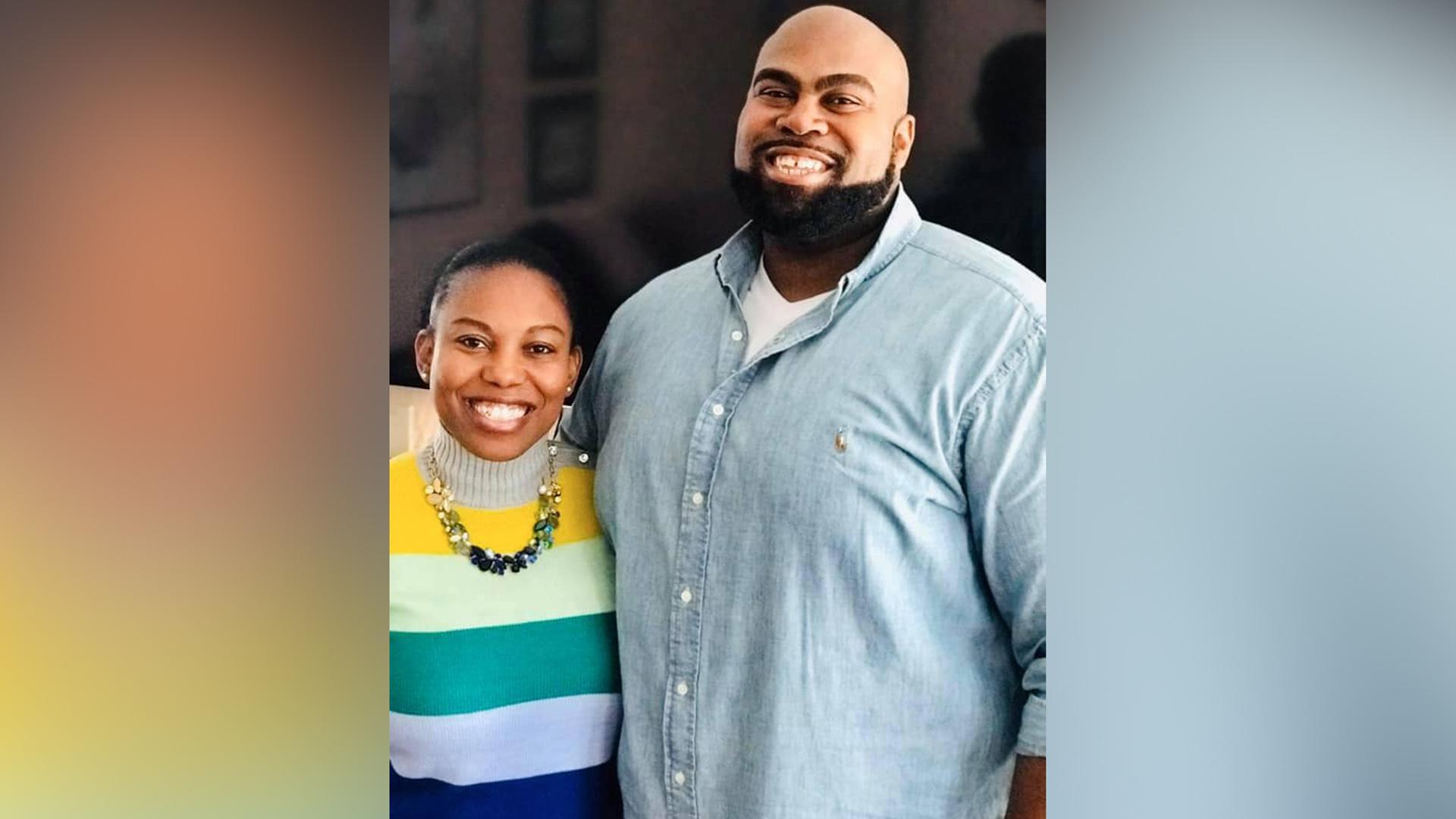
Pastor Nate Griffin of Chosen for Completion Ministries shares strategies for finding peace and compassion in the midst of chaos.
Read Transcript
- Well, certainly manypeople are struggling
with the pandemic anda lot of tension here
in the United States.
Based on a recent survey
with the National Centerfor Health Statistics,
nearly 30% of Americansare experiencing symptoms
of clinical depression,compared to only 6% last year.
And the numbers for anxiety also jumped,
36% now feel anxious, itwas only 8% last year.
So how can we find calmand peace in such turmoil,
and is it possible?
Well, Senior Pastor Nate Griffin
of Chosen for Completion ministries
in Portsmouth, Virginiajoins us now on Skype.
He's gonna talk more on this issue.
Welcome, Nate.
- Good morning, Andrew.
Thank you so much for havingme, I'm honored to be here.
- It's our honor to have you.
How can we overcome the anxiety
that so many people feel right now?
- For me overcoming anxiety is
about relinquishing theideology that states, I've got
to be in control, that I'min control of everything.
And it's my job to fixthe different calamities
that I'm facing in my life.
I think it's about graspingin its totality the revelation
that you are not responsiblefor your strength
or your help.
In the book of Isaiah, Isaiahcommunicates, God communicates
to us through Isaiah and he tells us,
"I have chosen thee, I will help thee.
I will strengthen thee."
Over and over again he tellsus, "I will, I will, I will."
And somewhere along our journey,
we've made that our responsibility.
And so now we put a weight on ourselves
that we are not preparedto carry nor equipped
to carry, rather than dependingon him to be our all in all.
So I think we overcomeanxiety through a willingness
to relinquish the controlthat humanistically,
we sold desire to possess.
- Yeah, and control is suchan issue for many people.
Now, Christians sometimes seem as hopeless
as the rest of the world so to speak.
Christians don't seem to show
much more joy than anybody else.
How do we find hope in these situations?
- Wow, that's a great question.
I think it's aboutshifting our perspective.
I think finding hope is aboutshifting our perspective,
about focusing on something different.
I think it's imperative thatwe understand what it is
that we're focused on.
Not to vilify 24-hour news channels,
but so often in life we are awakened
from our sleep with notifications
of the chaos happening in our world.
We exit our place ofbusiness on our lunch break,
only to find out thatwhile we were working,
the chaos was still occurring.
We go home and we walk throughthe threshold of our door
and we're reminded ofthe fact that the peace
that exists within ourhome does not exist outside
of our home.
And so time and time again we're inundated
with the chaos of what's around us.
We become familiar with it andwe become familiar with it,
we tend to normalize it.
And then normalizing that welook for it in everything.
It exist in everything that's around us.
So I really think it'sabout changing our focus.
And so I would say ratherthan us finding hope,
I think it's a shiftingour focus and realizing
that hope has responsibility to find us.
Time and time again we hear in scripture
about how Jesus strategicallypositioned himself
to be accessible to thosewho needed him most,
whether it was the womanwith the issue of blood.
Sure she had to press through the crowd,
but he still had to be in thearea, hope had to find her.
Even a blind man by the nameof Bartimaeus waiting outside
of Jericho's walls.
He didn't even have sight,
but Jesus still positioned himself
to be able to be found by him.
Out of all of the placesJesus could have stopped
while he trekked his way through Jericho,
he parked himselfunderneath a Sycamore tree
that Zacchaeus had climbed and said,
"Today I must come to your house."
Time and time again we findexamples of where hope found us,
the Samaritan woman at the well.
She had strategically positioned herself
so that she would not runinto anyone at the well.
She went at the heat of theday so that she would not have
to worry about company at the well,
but hope found her where she was.
So rather than I think puttingthe pressure on ourselves
to try to find a way to discover hope
during the season of calamity,
I think it is imperativefor us to shift our focus,
to open our eyes and to understandthat hope is finding us,
hope is looking for us.
And as long as we decide tobe focused on the good things
whatever's peaceful, whatever's lovely.
As long as we decide to befocused on those things,
I think that we'll get thehope that it is that we need.
- Exactly, and talkingabout changing our focus,
looking at studying andmeditating on scripture,
as you just mentioned isa great way to do that.
One thing scripture promises of course,
is that the peace of Godsurpasses our understanding.
Talk about that.
- Man, the peace of God,beyond, beyond comprehension,
transcending human intellect or wisdom,
the peace of God, the peace of God.
The thing that I cannot quantify.
The peace of God, thething that I cannot weigh,
the thing that absolutelytranscends my understanding.
When I think about thepeace of God, Andrew,
I am reminded of a groupof guys on the boat,
in the middle of the Sea of Galilee.
I'm reminded of trained fishermen.
James and John were the sons of Zebedee.
Their father owned awhole fleet of shipping
of fishing boats.
And Peter had grown up fishing.
I look at trained individualswho find themselves
in this moment of chaos, thesea has become boisterous.
The wind has become aflagrant against them,
and they're trying tofight for their survival.
After they've gone throughevery trick of the trade
that they knew, after they've exhausted
all other possibilities,they finally go to the bow
of the ship and they began
to shake a Jesus who is still asleep,
a peace that surpasses all understanding.
They began to shake him andsay, "Master, care's thou not
that we should perish?"
And I imagine Jesus wakenup, he's yawning and,
"Come on guys, where's your faith?"
And he walks to the edge of theboat and he rebukes the wind
and he calms the sea and it's that peace
that passes all understanding.
It's the ability to speakexternally what exists internally.
And so when the worldaround you is looking at you
and they're expecting you to be stressed
and they're expecting you to be broken
and they're expecting you to be anxious
and they're expecting you to be depressed
because of all of thesedifferent things going
on in your life.
I've got somethinginternally that's holding me.
I've got something internallythat's steadying my ship.
Everything around me is crumbling.
Everything around me seemsto be going up in flames.
But I've got something on the inside
that the old church wouldsay is moving on the outside.
And it's called themiraculous change in my life.
If I am given the opportunityto experience this peace,
what happens is, it becomesso prevalent in my life
that it begins to rub off on me.
And what we see is the samedisciples who shook Jesus
and asked him why he didnot care that they perish.
We find Peter in the book of Acts,
I believe it's the 12thchapter of the book of Acts.
And the night before he's supposed
to be murdered by Herod.
And we find him in a jail cell sleeping,
in between two guards.
A peace that surpasses all understanding.
So this is the essence of that peace,
the ability to speak externallywhat exist internally.
And as long as we have that peace,
we have the ability to overcome the chaos
of the world around us.
- Amen, Pastor Nate,thanks for joining us,
bringing us a timelyword of encouragement,
a desperately needed word in these days.
Thanks so much for being with us.
- Thank you, Andrew, God bless.