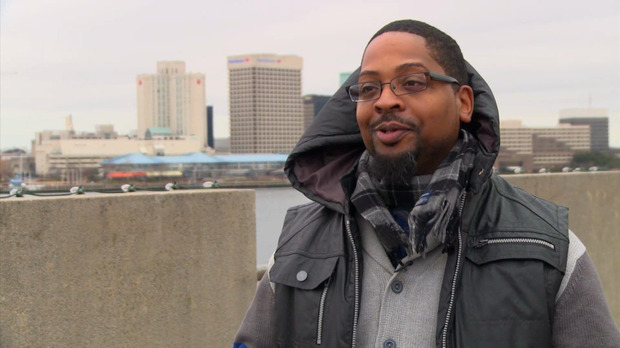
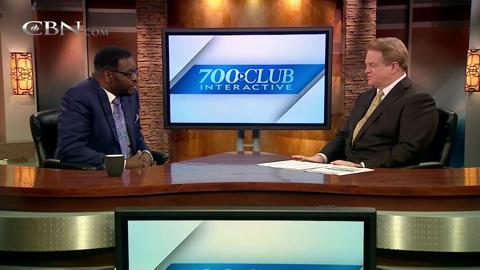
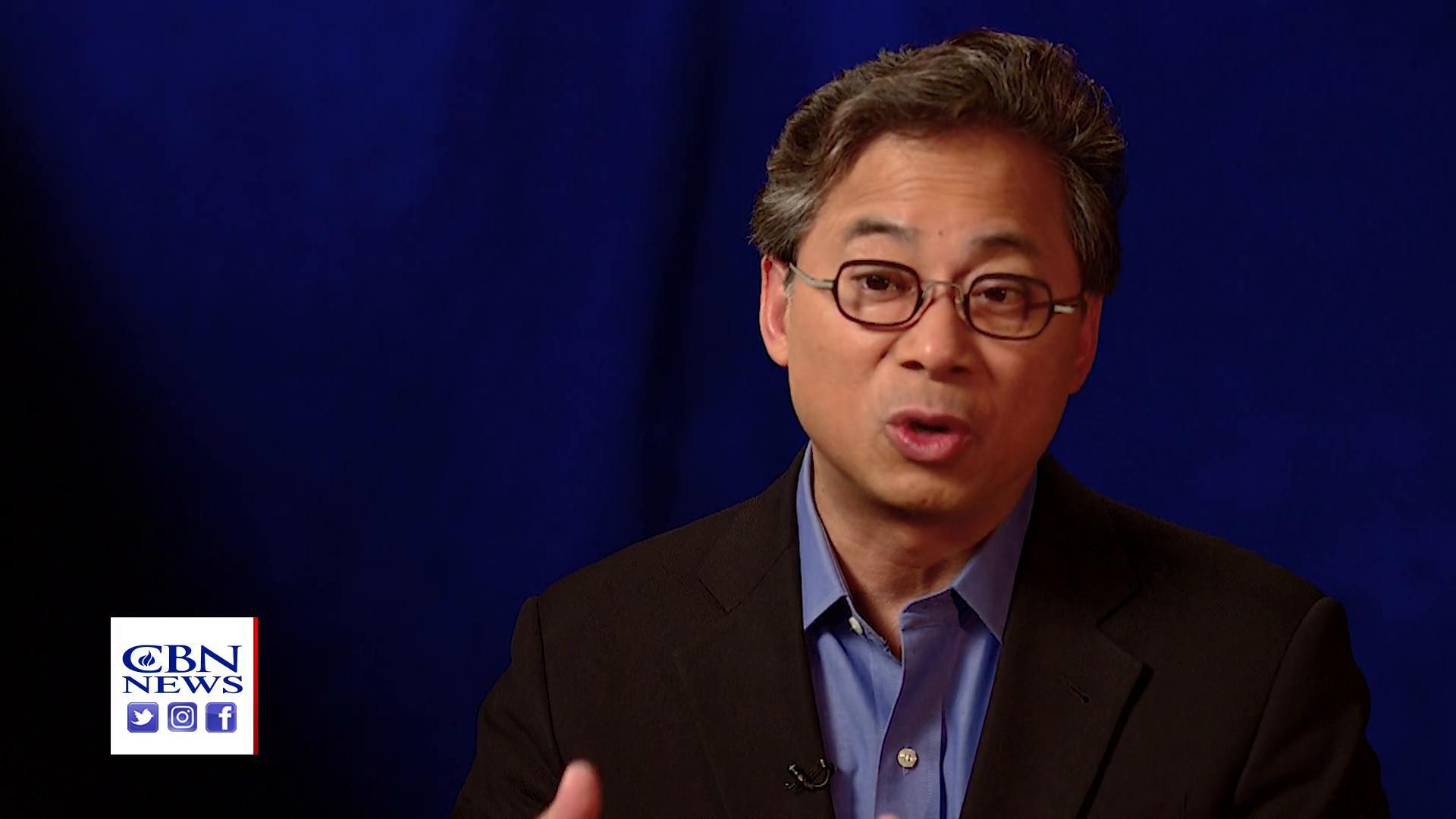
Bishop Harry Jackson believes the church can play a pivotal role in bringing racial reconciliation to our nation.
Read Transcript
As racial tension
increases in the US,
many people wonder how we
can close the racial divide
in our communities.
Bishop Harry Jackson
says there is hope.
He gives lectures
and hosts conferences
about racial reconciliation.
As senior pastor of Hope
Christian church in Washington
D.C., he believes
the church should
play a vital role in
unifying people of all races.
Our good friend bishop
Harry Jackson is back with us
and welcome back.
It's good to have you.
Thank you Gordon.
Good to be with you.
Racism is obviously
very close to you,
but I didn't know the story that
your father was trying to vote
and a policeman actually
tried to stop him.
Yeah he was involved in
voter registration in Florida
in the 50s and a state
trooper, he told--
this is one of those family
stories that gets passed down--
told the story of the state
trooper making him kneel down,
taking out his weapon.
Then he discharged it
over my dad's head,
temporarily deafening him
and then he used the n word,
saying, if I hear
about you doing this,
next time I'll kill you.
And unfortunately, in
that part of Florida
they were in at that time,
there had been horrific stories
of lynchings and those
were common place,
even as late as the 50s.
So my dad left his
house, but it forced
him to take stock
of what could he do,
realistically, to change things.
For him, it was he got involved
in politics, not running,
but he was just an advocate.
We'd have a little sign
on the top of our car,
remember those days, and
out in the yards, I mean--
Yep, you have the bullhorn.
Right, bullhorn kind of thing.
So my mother and dad--
until my mother, she's
deceased now, was 83 years old,
she volunteered at voting
polls and they just
believed so much that was a
sacred right that it had tried
to be taken away from them.
And I think that's where the
seeds for what we are doing--
Most people don't understand
the whole struggle to vote,
Yes.
the whole struggle to
establish one man, one vote--
Exactly
as a bedrock of democracy.
Absolutely.
So dad thought it was sacred.
I think it's really
been one of the ways
that we had positive
change in the nation
and I believe informed
Christians can change things
with public policy and the
structural things, most of them
do need public policy
change or change
that is brought about
because of the vote.
Personally, racism, if I
were to write a book today,
I'd entitled it
racism rising and then
I'd say seven bridges to peace.
We know that their
racism is on the upswing
and it's crazy, Gordon, because
you remember in Baltimore,
did you see the
picture here of a kid
who was trying to stomp out
the windshield of a car?
He's literally
standing on the hood.
And this picture is seen
all around the globe.
Many of those people
were 17 to 22 years old.
They don't know the
story about my father.
They didn't live in an America
where anybody got lynched,
but there is an entitlement
issue, as well as
genuine structural barriers
that are making them angry.
And I think we have
to address this now.
I don't think things are going
to get better for the nation
if we just let it go by saying,
it'll just take some time.
I don't think that's
your approach.
Well, I agree with you.
It takes active intervention.
And just as the
civil rights movement
required active intervention
to achieve what it achieved,
if we're going to have
true unity in America,
one nation, under
God, indivisible,
with liberty and justice for
all, not just say those words,
not have that be aspirational
and let's make that real--
Yes.
I think we need spiritual
solutions to this.
And how do we do that?
How do we achieve that?
Well, I think
the church has got
to work at bringing healing.
Simply put, I won't go into the
derivation of racial schisms,
I simply would say in Christ,
if we live out our credo,
we as a church can come
together in these pockets
around the country.
But we need to work together
to change specific things.
Blacks and Hispanics have
class-oriented struggles
that are very, very similar.
If they, Hispanics and we,
blacks, go across this race--
the education divide, excuse me,
and are able to speak English,
do math, reading,
and other things,
we can enter the mainstream
that will give us
permanent liberation.
There's also economic
development and a evening
of the playing field
that has to happen
in many of our urban centers.
And I think you can do
that within the context
of capitalism.
We're not talking about
socialistic answers.
I'm against those
kinds of things.
But I think if we don't
deal with the things that
make people feel like they're
shut out from society,
and we're going to have
problems, even more problems.
So how does the church do that?
Shouldn't the church
lead the charge?
I mean Reverend
Martin Luther King
Jr. said 11:00 AM was the most
segregated hour in America.
I am starting to
see that change.
HARRY JACKSON: Yes.
I am seeing churches becoming
intentional to say we want
to be multi-ethnic.
They are.
And that's one of the great
things that's happening.
In the Washington
DC area I don't
know of a church that
is not integrated,
because you've got-- in
the Maryland suburbs,
47% of the population is black.
And you have a huge
Hispanic population,
and eventually, whites are going
to be in the minority there.
So yes, the church has got
to live it out together,
and then I believe we're
going to have to decide
on what to do collaboratively.
Your friend and someone
interviewed many times
here, TD Jakes, is
doing an amazing job
with reentry in criminal
justice for prisoners.
They've graduated 10,000
people from prison,
from a program, gone through
getting jobs, job readiness,
and they've gotten a
presidential citation because
of it.
But if you had 10 churches
working together in Dallas,
we could just name off
some of the top ones,
we could multiply what the
impact of that work is.
Miles McPherson in San
Diego gives 100,000 hours
a year to the mayor and
the city of San Diego
and says, OK, you
choose what you need.
We'll mobilize what is about
the equivalent of $8 million
worth of labor to fix whatever
problems you need to fix.
So I think it's both/and.
I think it's solving the
race problem in our hearts
with our neighbor Christians,
and then working together
to do specific
things that can make
a difference in
this next generation
not feeling like they're
left behind and shut out.
What can people
watching right now,
what would you tell them to do?
Well, first I would encourage
them to go to our website
and check out what
we have there.
But I think bringing pressure
on their legislators,
public policy pressure in
this political environment
could go a long way, I believe.
And there's a
justice declaration
that's going to be happening
this Tuesday that's
going to really just
talk about our need
as Christians to be those who
share mercy and help people get
a second chance.
All right.
Well, Bishop Jackson, always a
pleasure to have you with us.
Thank you.
Thank you, Gordon.
Bless you.